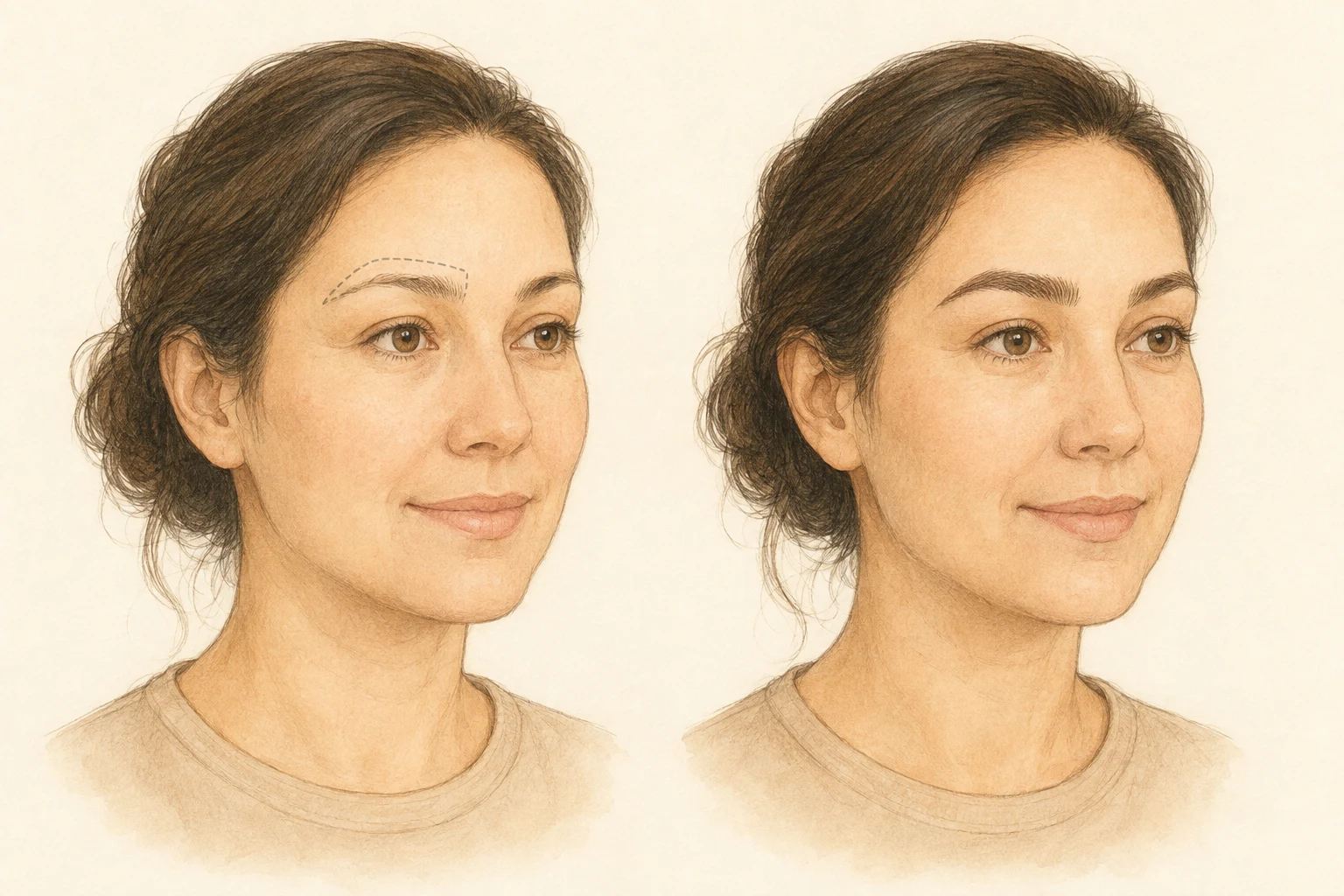
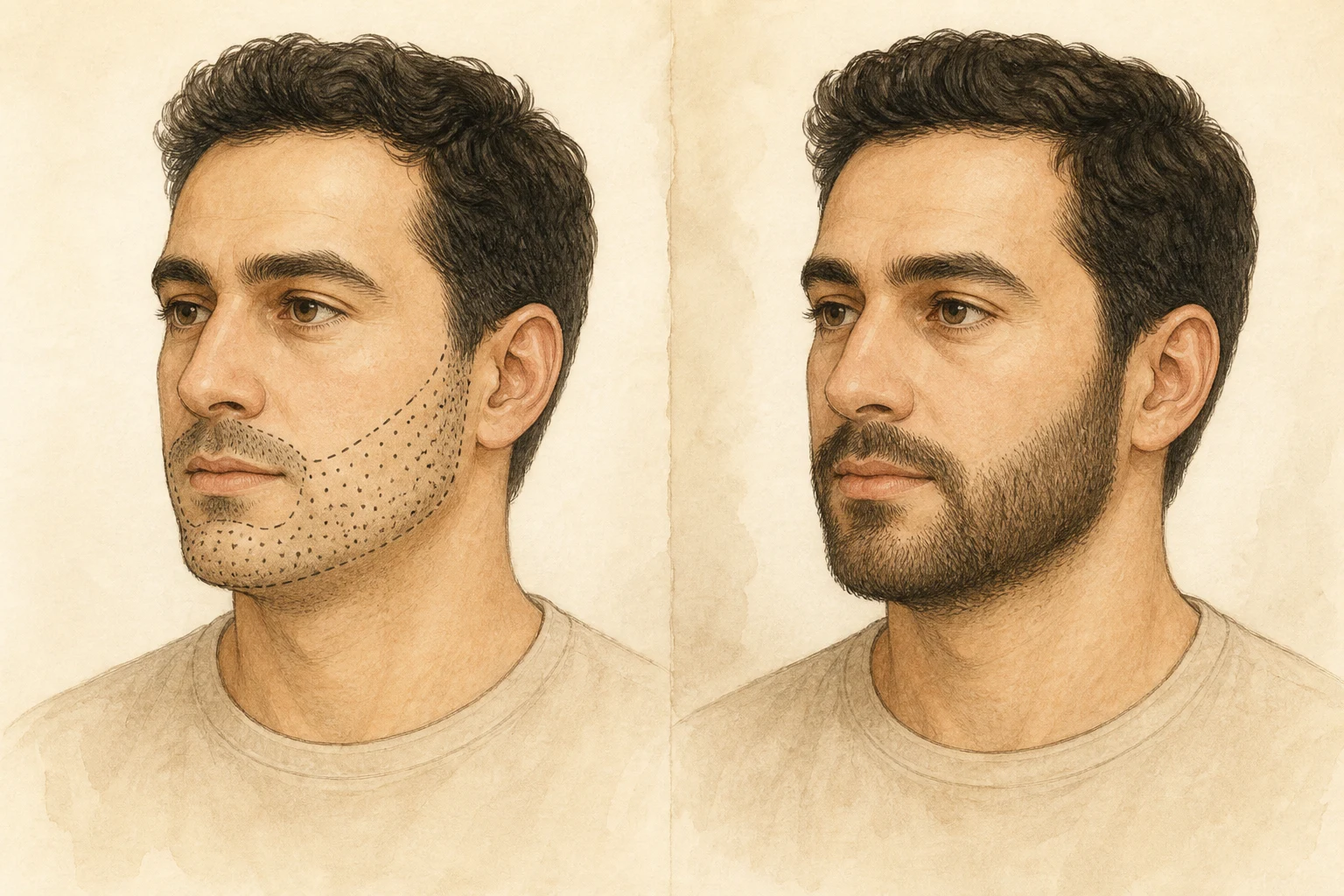
A turkey fue hair transplant should be planned around donor safety, hairline design, and realistic density. This guide explains how FUE works in patient terms and what to ask before choosing a package.
What FUE changes
FUE removes follicular units one by one from the donor zone, usually the back and sides of the scalp. It avoids a linear strip scar, but it still leaves tiny extraction points and still depends on safe donor management.
The technique name does not guarantee a good result. A careful hair surgery turkey plan should match graft count to current hair loss, future thinning, hair calibre, curl, contrast, and the area being restored.
Graft planning and donor limits
Ask whether the proposed graft number is based on measurement or marketing. A high number may sound attractive, but over-harvesting can create visible thinning in the donor area and reduce options for later hair loss.
Good planning usually prioritizes the frontal frame before chasing full crown density. Crown work can consume many grafts, so the long-term plan matters as much as the first session.
Recovery and shock loss
After FUE, the donor area may feel sore, dotted, or numb for a period. Scabs in both donor and recipient areas should clear gradually with washing instructions.
Shock loss can affect transplanted hairs and sometimes surrounding native hairs. It is usually discussed as a temporary phase, but unusual pain, infection signs, or patchy donor changes should be reviewed promptly.
Questions for the surgeon and team
Ask who extracts grafts, who opens recipient sites, who implants, and how grafts are counted. Also ask how many patients the team treats that day and what happens if the donor area cannot safely provide the quoted number.
For technique and candidacy details, see FUE hair transplant in Turkey.
FAQ
Is FUE scar-free?
No. FUE avoids a linear strip scar, but extraction points can still be visible if the donor area is over-harvested or shaved very short.
How many grafts do I need for FUE?
It depends on hair loss pattern, donor density, hair calibre, goals, and future thinning. A photo estimate should be confirmed with medical assessment.
Is FUE better than DHI?
Neither label is automatically better. The right method depends on donor supply, recipient area, team skill, and the plan for natural angle and density.